
Indoor + Outdoor Interceptors
Grease trap service
Keep the kitchen flowing.
Scheduled grease trap cleaning and pumping for commercial kitchens, built around your volume, locations, and operating schedule.
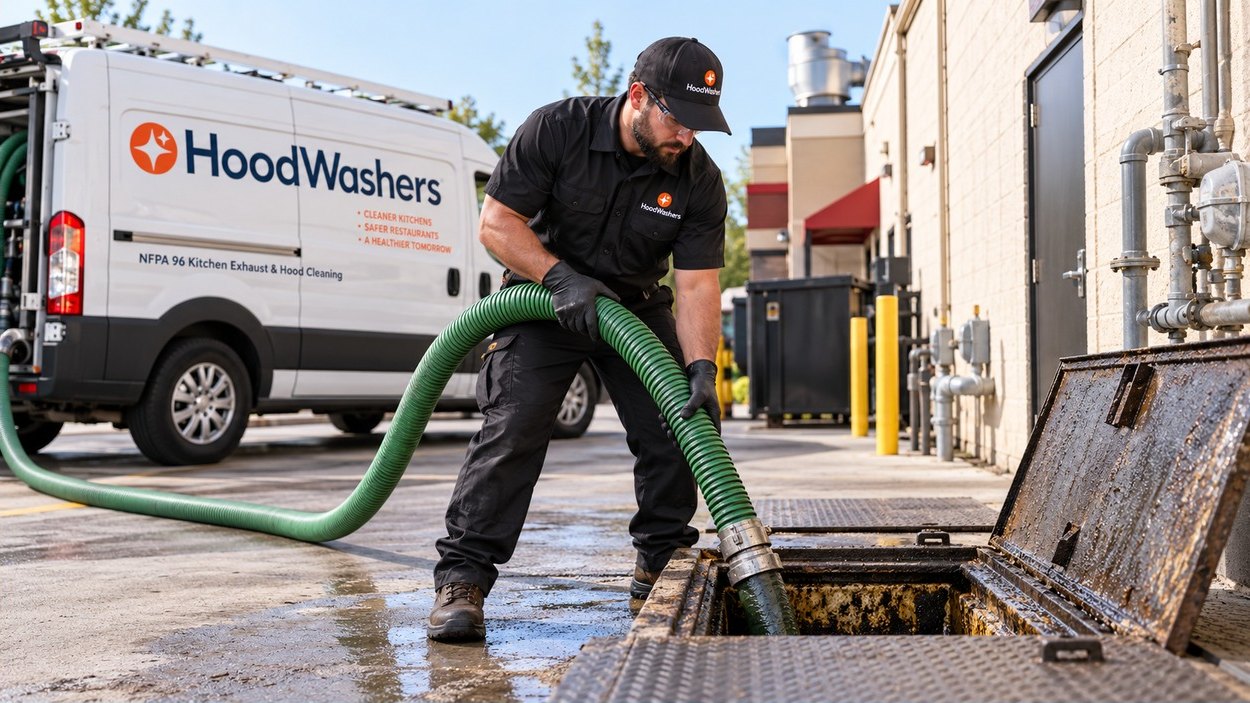
Two types of systems
Indoor or outdoor, we service both.
The equipment is different. The goal is the same: keep fats, oils, and grease out of your plumbing and the sewer line.
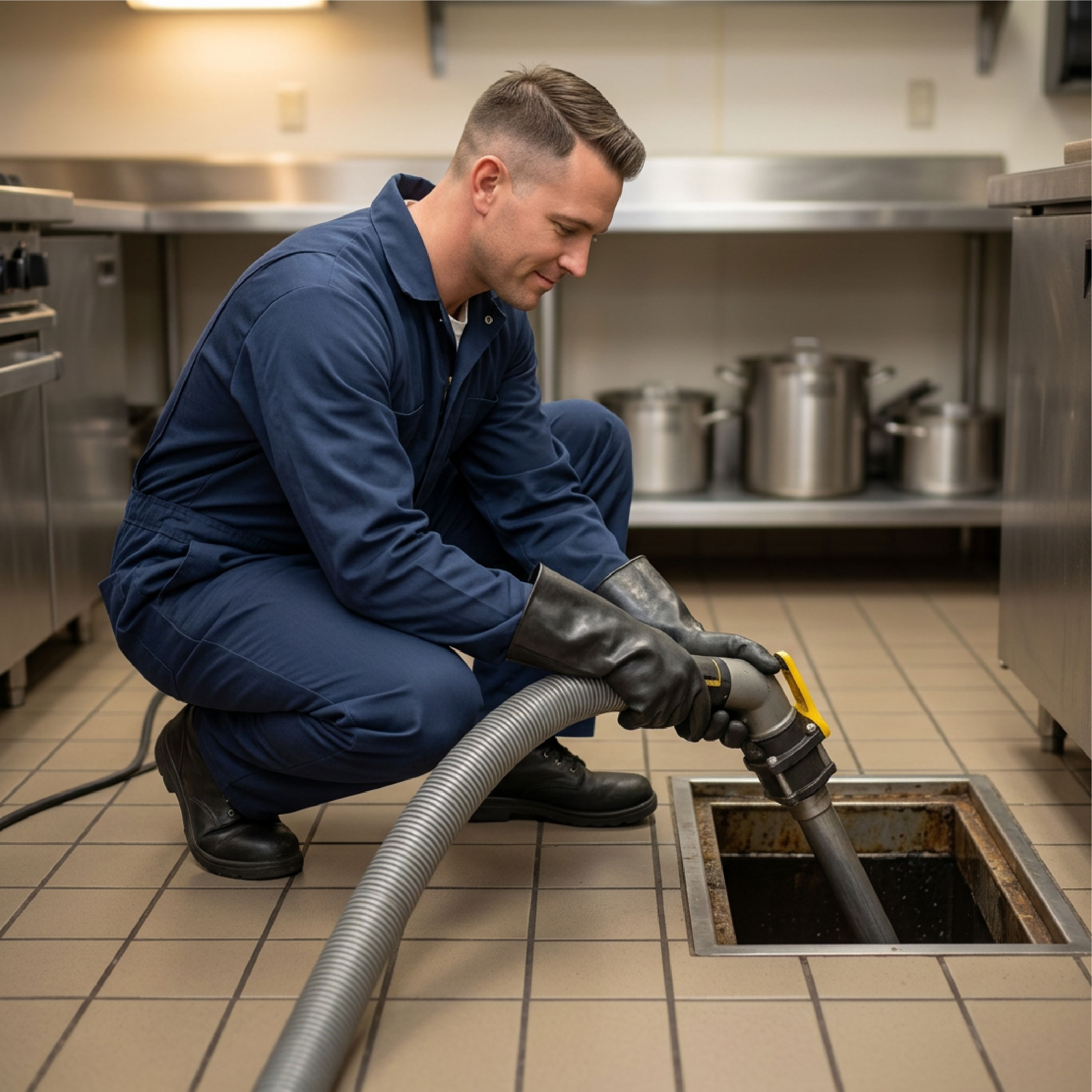
Indoor
Hydromechanical interceptors
Compact units installed inside the kitchen, usually under or near sinks and dish areas. They separate grease from wastewater as it flows through and fill up quickly in a busy kitchen.
Inside the kitchen
Smaller capacity
Frequent service
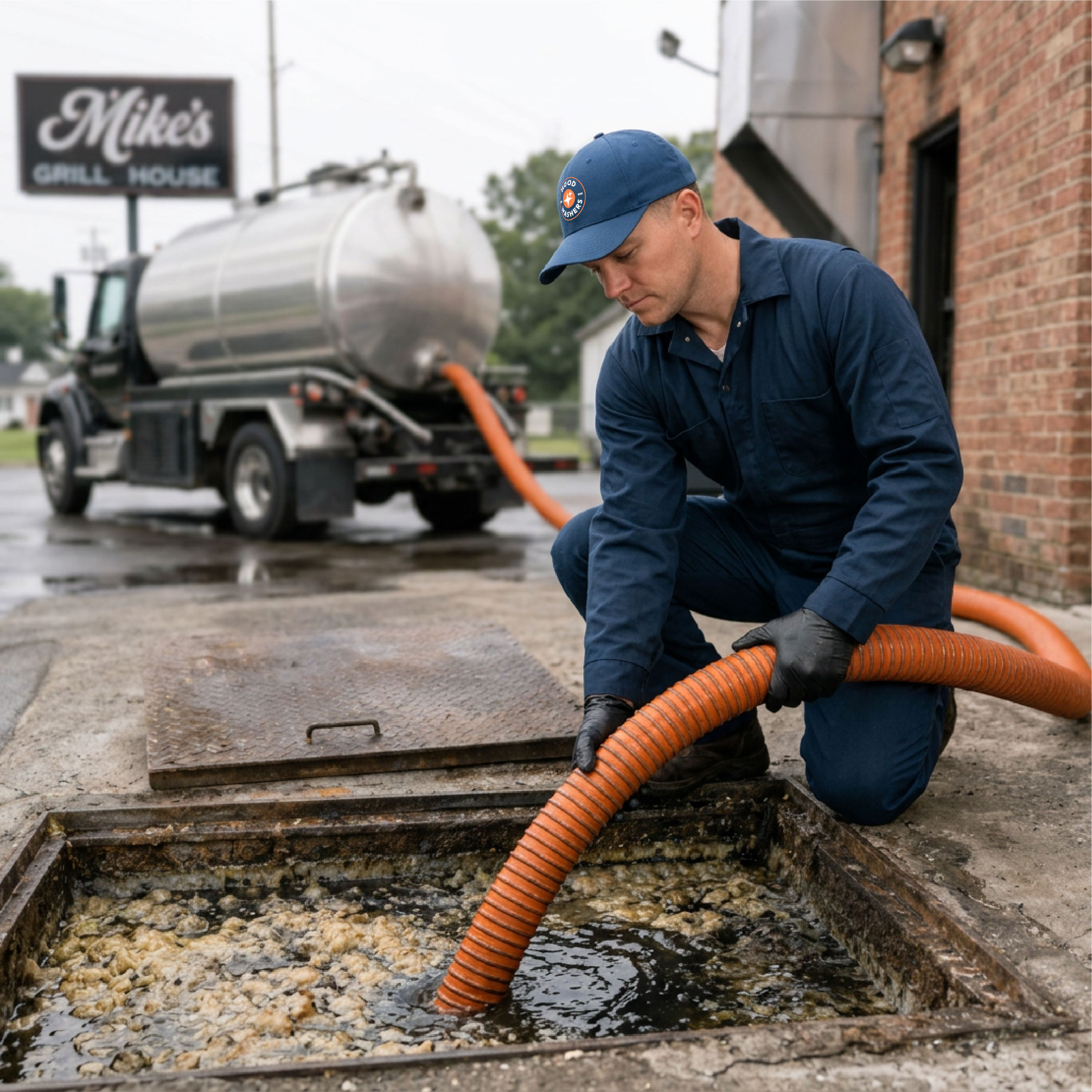
Outdoor
Gravity interceptors
Larger tanks typically installed underground outside the building. They use time and gravity to let grease rise and solids settle before water continues to the sewer.
Underground tank
Larger capacity
Pumped by truck
Not sure which system you have? We’ll identify it on the inspection.
When service gets missed
Grease traps usually become noticeable when something goes wrong.
A trap works quietly until it doesn’t. Here’s how the problem builds between missed services, and why a schedule matters more than a reminder.
Stage 01
FOG builds
Fats, oils, and grease float and harden into a thick top layer.
Stage 02
Capacity drops
Solids settle at the bottom and the working volume shrinks.
Stage 03
Odors & slow drains
Sour smells reach the kitchen and drains start running slow.
Stage 04
Backup or overflow
Grease passes through or backs up, often mid-service.
Stage 05
Operational problem
Plumbing calls, downtime, and questions about pump records.
Get ahead of the backup.
The HoodWashers service
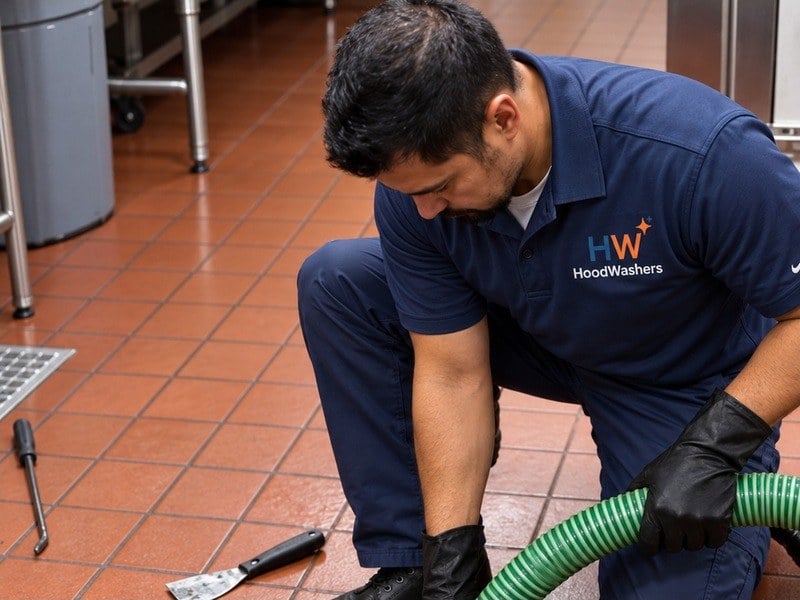
Grease trap cleaning: pumped, cleaned, and documented.
A complete service every time, from the top grease layer to the solids at the bottom.
01
Access & inspect
We open the trap, check condition, and note anything that needs attention before pumping.
02
Pump completely
The full contents are pumped out, top to bottom.
03
Remove accumulated solids
Settled solids and hardened buildup are removed from the bottom and walls.
04
Clean & inspect components
Walls and baffles are scraped, and accessible internals are inspected for damage.
05
Document service
You get a dated service record with photos and anything we noted.
06
Set the next interval
We recommend the next service date based on what we found.
Want the whole trap pumped?
The right schedule
Not every kitchen needs the same schedule.
Putting every location on the same grease trap cleaning calendar means some traps get pumped too often and others not often enough. We set the interval from what your system actually needs.
The result
A service interval set for your kitchen and reviewed after every pump.
Interceptor size
A small indoor unit and a large outdoor tank fill at very different rates.
Restaurant volume
More covers and longer hours mean more grease going down the drain.
Menu & grease production
Fryers, grills, and sauces change how fast FOG builds.
Local requirements
Some cities and wastewater authorities set their own pumping rules.
Historical buildup
What we find at each service tells us whether to adjust the interval.
Let’s set the right interval for your kitchen.
Multi-location
One grease trap program. Every location.
For restaurant groups and multi-site operators, we coordinate grease trap cleaning for every location under one program, so nothing depends on each manager remembering a pump date.

Centralized scheduling
Documentation for every service
Service history by location
One point of contact
Grease trap program
Sample view
Location 01
Pumped · last week
Serviced
Location 02
Next pump in 9 days
Upcoming
Location 03
On a 60-day interval
Scheduled
Illustrative example. Intervals shown are sample data.
Managing more than one location?
Signs you may need service
If you don’t know when your trap was last pumped, it’s time to find out.
Slow drains
Persistent odors
Visible grease buildup
Unknown last service date
A history of overflows
Repeated plumbing issues
Common questions
How often should a commercial grease trap be pumped?
Grease trap cleaning frequency depends on the trap’s size, your volume, your menu, and local requirements. Many jurisdictions use a rule that a trap should be pumped before grease and solids reach about a quarter of its capacity (see the EPA’s guidance on fats, oils, and grease). We inspect your system and recommend an interval based on how fast it actually fills.
What is the difference between an indoor grease trap and an outdoor interceptor?
Indoor hydromechanical traps are smaller units inside the kitchen that need frequent service. Outdoor gravity interceptors are larger underground tanks outside the building that hold more and are pumped by truck.
Do you completely pump the interceptor?
Yes. We pump the full contents, remove settled solids, and scrape the walls and baffles.
Can you service multiple restaurant locations?
Yes. We coordinate grease trap service for multi-location operators across our service area: UT, CO, OR, WA, ID, CA, NV, AZ, MT, WY, and NM.
Do you provide service records?
Yes. Every service is documented with the date, what we found, and photos, so you have records ready for inspectors or wastewater authorities.
Can HoodWashers create a recurring schedule?
Yes. After the first service we recommend an interval and keep each location on it, adjusting if buildup is faster or slower than expected.
What size interceptors do you service?
We service both indoor hydromechanical traps and outdoor gravity interceptors. Tell us about your system and we’ll confirm the right approach during the inspection.
Less Stress. More Trust.
Don’t wait for the backup.
We’ll inspect the system, look at your operation, and help establish the right service interval.