
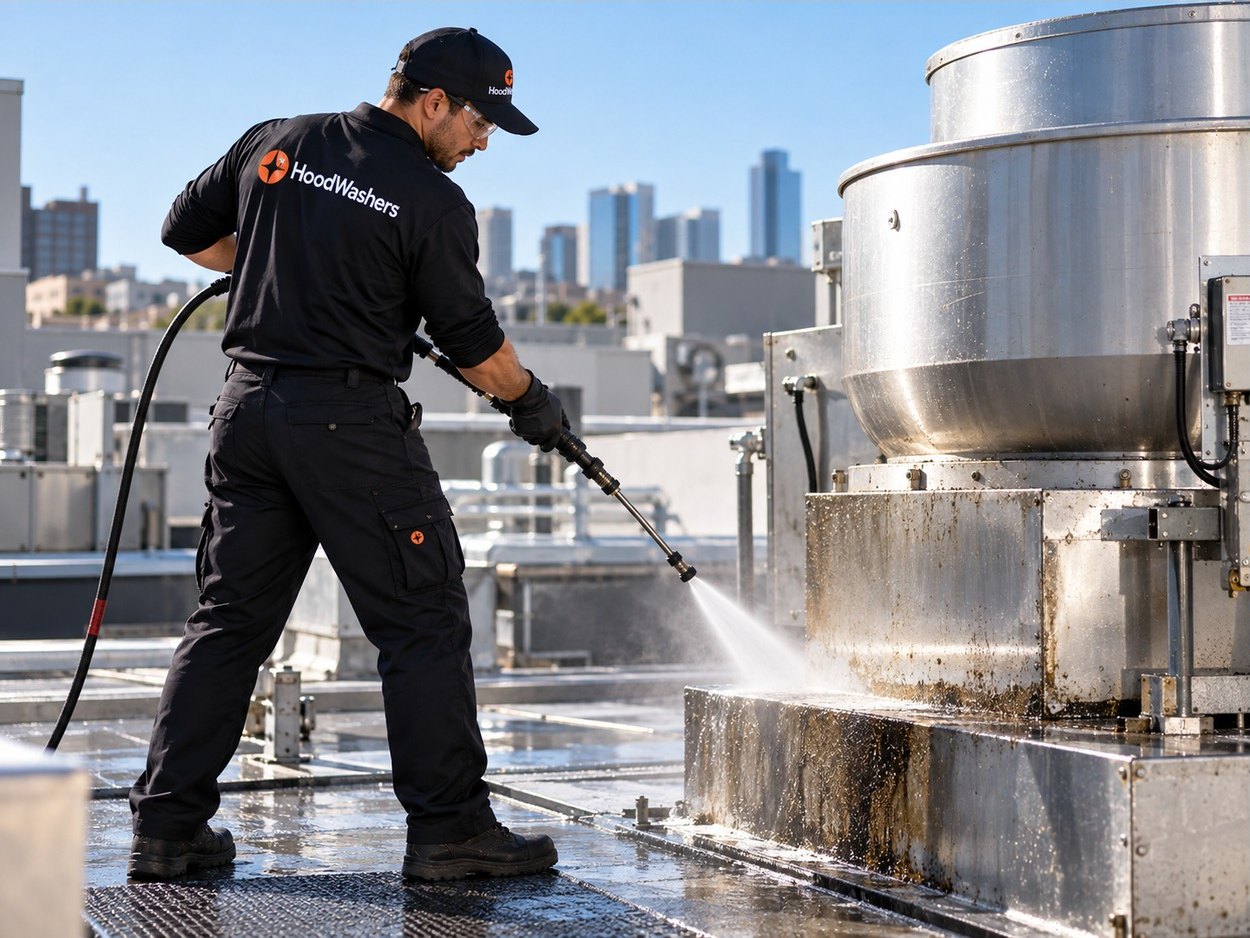
Rooftop grease removal
Grease doesn’t disappear when it leaves the fan.
Rooftop grease removal for commercial kitchens: we remove grease buildup around exhaust equipment while protecting roof surfaces, controlling runoff, and documenting the work.
Follow the grease
The exhaust system ends.
The grease problem doesn’t.
Hood cleaning handles the inside of the system. But everything the fan discharges has to land somewhere. On most restaurants, that’s the roof.
1
Kitchen cooking
Grease vaporizes on the cook line.
2
Exhaust hood
Vapor is captured and pulled upward.
3
Ductwork
Some condenses on the duct walls.
4
Exhaust fan
The rest is pushed out at the roof.
5
Roof surface
It lands around the fan curb and spreads.
6
Drains & equipment
Rain carries it toward drains and nearby units.
01
Kitchen cooking
Grease vaporizes on the cook line.
02
Exhaust hood
Vapor is captured and pulled upward.
03
Ductwork
Some condenses on the duct walls.
04
Exhaust fan
The rest is pushed out at the roof.
05
Roof surface
It lands around the fan curb and spreads.
06
Drains & equipment
Rain carries it toward drains and nearby units.
■ Outside the exhaust system: where rooftop service comes in.
When did someone last check your roof?
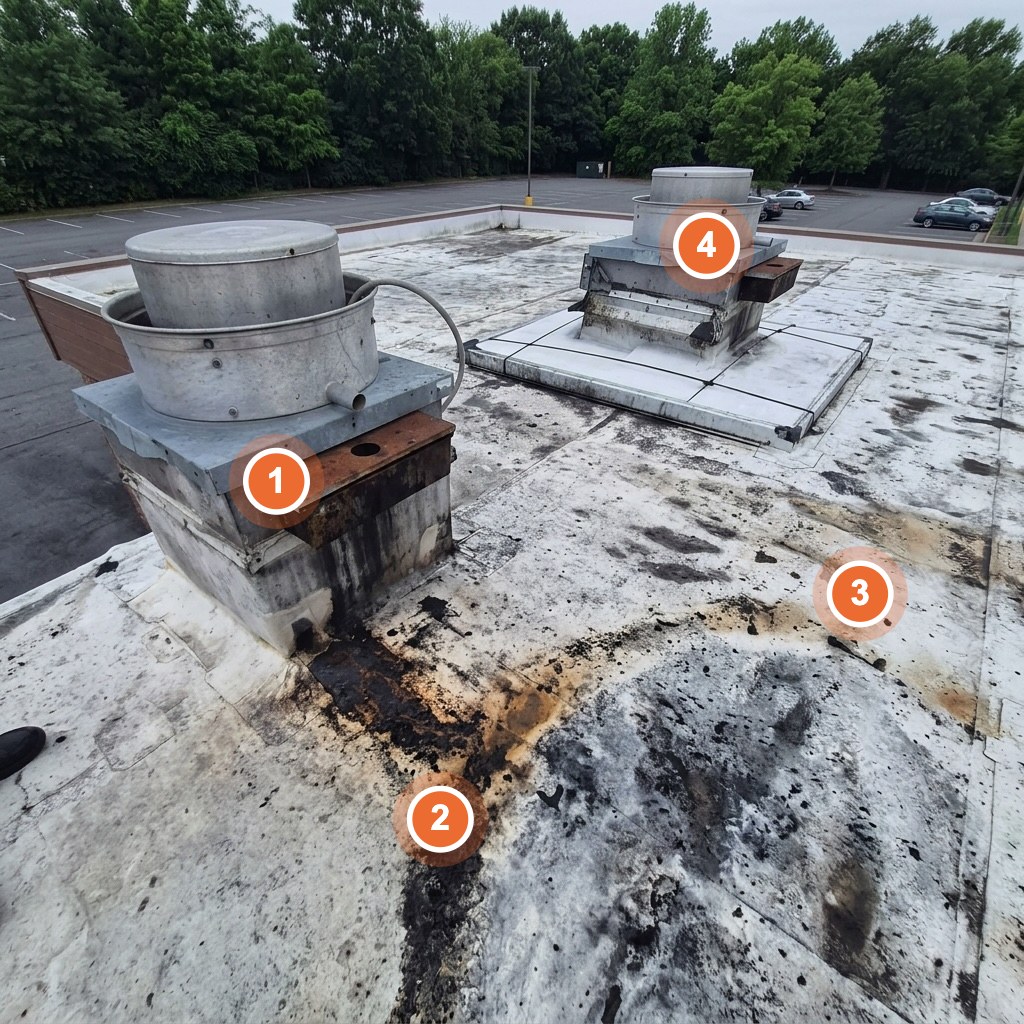
Inspection view
What we look at on your roof.
1
Fan curb
Grease collects first where the fan meets the roof.
2
Grease staining
Discharge spreads across the membrane, darkest near the fan.
3
Roof membrane
Grease softens and breaks down many roofing materials over time.
4
Nearby equipment
Neighboring units and curbs pick up residue too.
We also check where staining is heading, toward drains, scuppers, and roof seams.
We’ll walk your roof and show you what we find.
On the roof
See what was sitting on the roof.
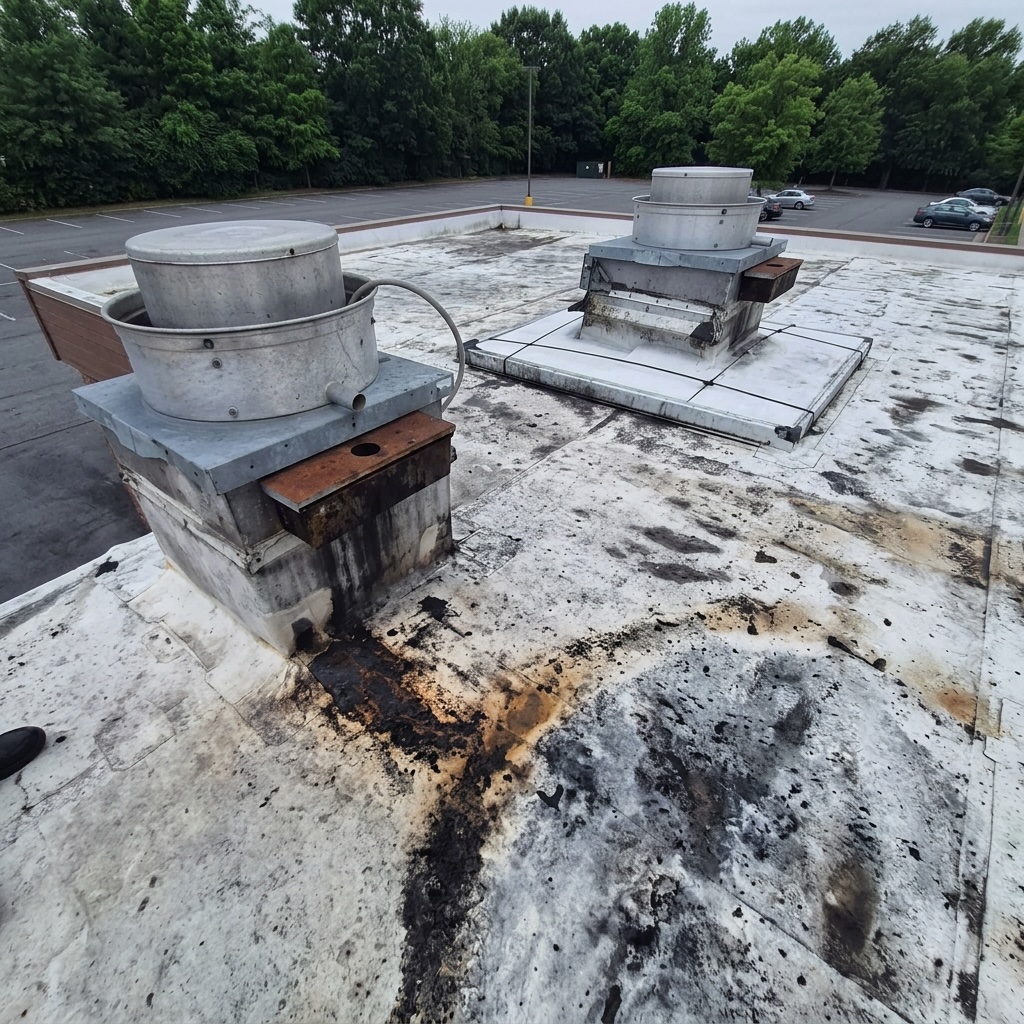
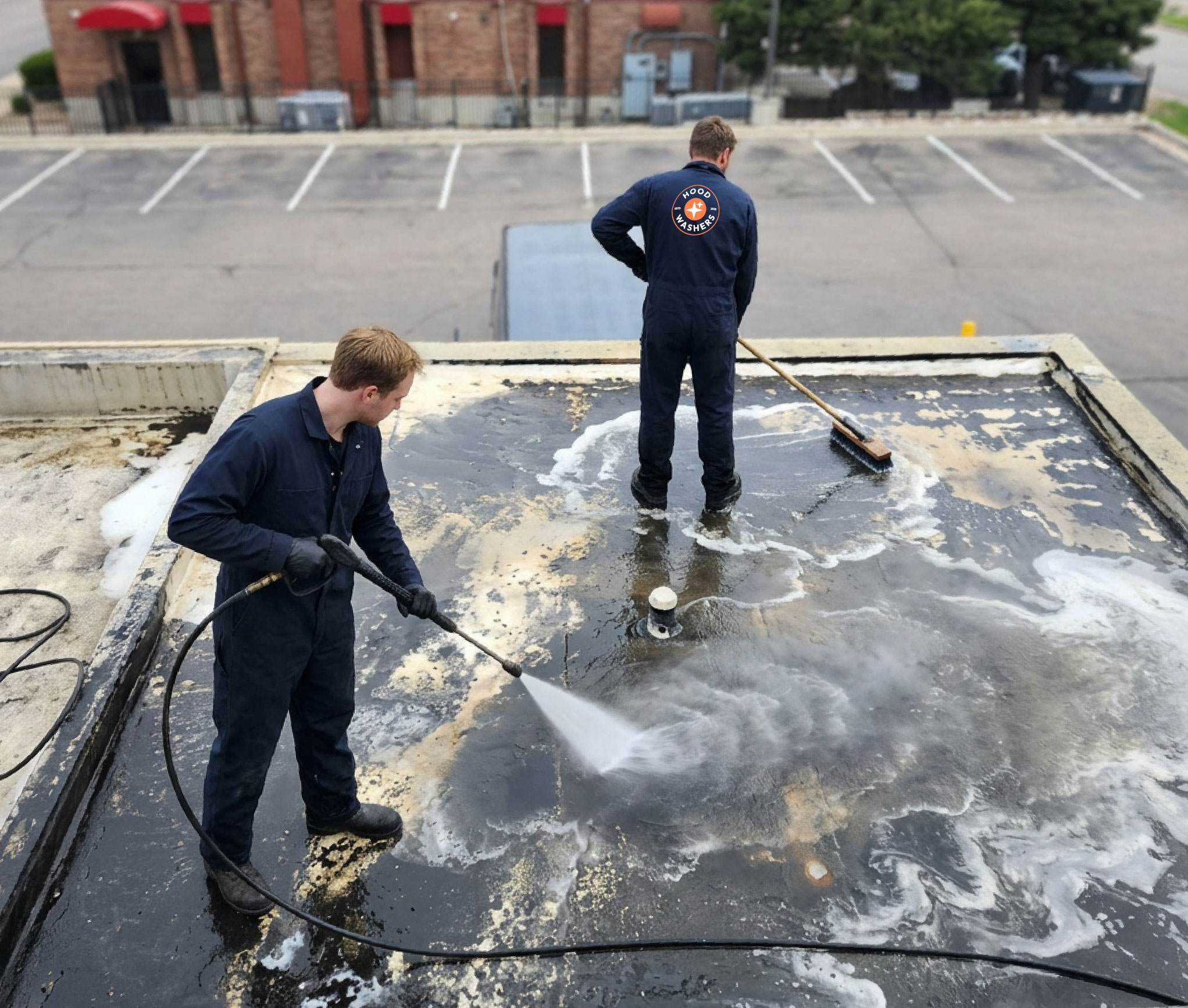
See what’s sitting on your roof.
Why it matters
Why rooftop grease matters.
Roof membrane
Grease breaks down roofing materials.
Many common roof membranes soften, swell, or deteriorate under constant grease exposure. The damage usually shows up as repairs long before anyone traces it back to the exhaust fan.
Fire exposure
Grease-saturated surfaces around the fan add fuel right next to the exhaust discharge.
Drains & runoff
Rain carries grease toward drains and scuppers, where it can clog and spread.
Pests
Grease on the roof attracts birds and pests near your building.
Landlord & property
Roof condition often comes up with property managers at repair time or lease renewal.
How we clean
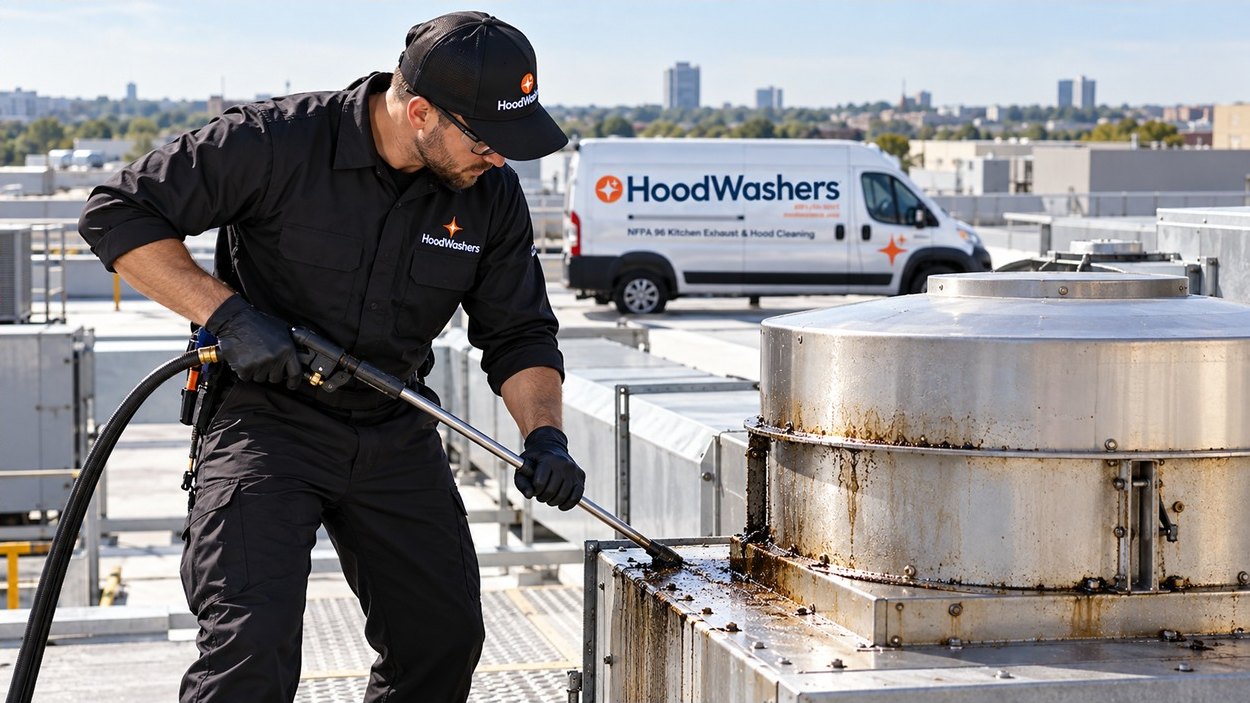
Remove the grease.
Protect the roof.
Rooftop grease removal done the wrong way can damage the membrane or wash grease straight into the storm drain. Our process is built to avoid both.
Step 01
Inspect
Identify the roof type and condition before choosing a method.
Step 02
Protect
Protect surrounding areas, equipment, and drains before work starts.
Step 03
Apply the right method
Match the grease-removal method to the roof system and its condition.
Step 04
Contain
Control and contain wastewater and residue so it doesn’t run off the roof.
Step 05
Remove
Remove accumulated grease and material from the roof surface.
Step 06
Document
Before-and-after photos of every area we service.
Need grease removed without damaging the roof?
Better together
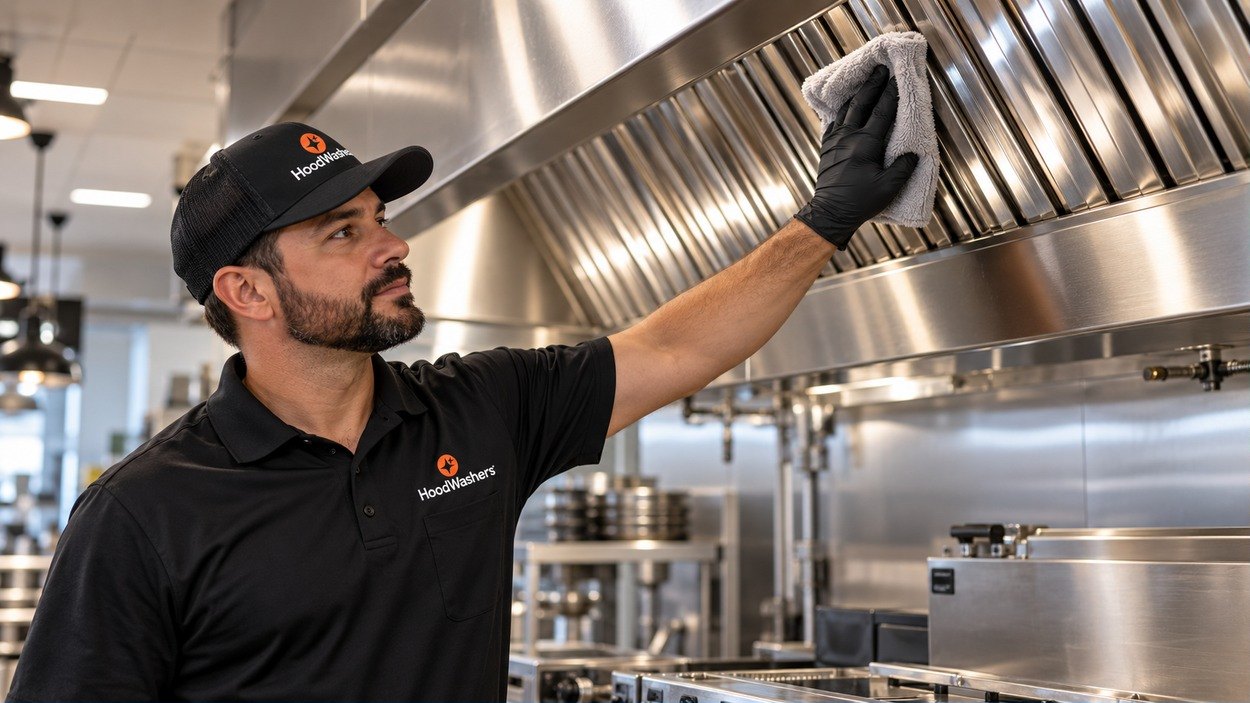
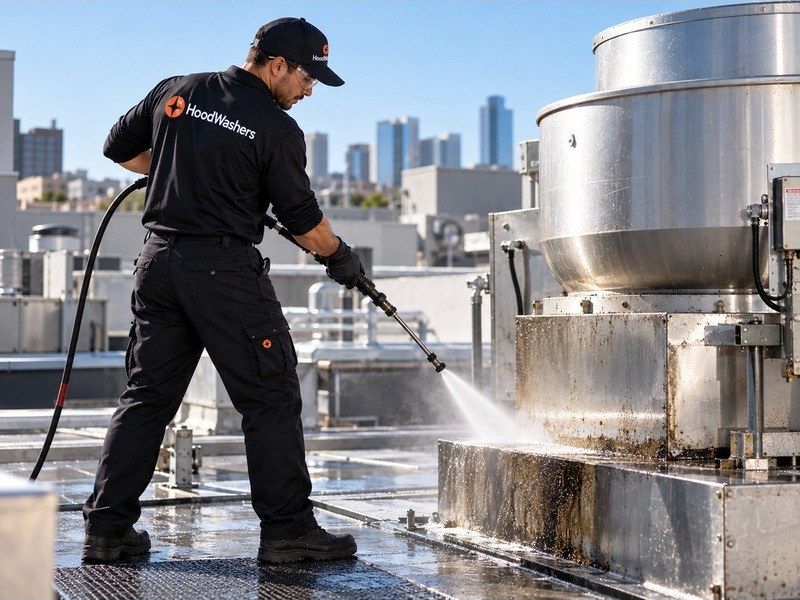
The hood and the roof are part of the same grease path.
Exhaust cleaning removes grease inside the system: hood, ducts, and fan. Rooftop grease removal takes care of what the fan has already deposited outside it. Scheduling both together covers the whole path in one visit.
+
Common questions
How often should rooftop grease be removed?
Most kitchens need rooftop grease removal one to two times a year. High-volume fryer operations and 24-hour kitchens often need it quarterly. An inspection shows where your roof actually stands.
Does normal hood cleaning include the surrounding roof?
Usually not. Hood cleaning covers the exhaust system (hood, ducts, and fan) as described in NFPA 96. Grease that has already landed on the roof around the fan is separate work.
Can grease damage commercial roofing?
Yes. Constant grease exposure breaks down many roofing materials over time, which is why buildup around the fan curb is worth addressing early.
Do you pressure wash roof membranes?
Not as a one-size-fits-all approach. High pressure and heat can damage some membranes, so we match the cleaning method to the roof system.
How do you control runoff?
We protect drains and surrounding areas and contain wastewater and residue during the work, so grease isn’t washed off the roof and into the storm system.
Can HoodWashers inspect the roof while servicing the exhaust system?
Yes. Our crews are already on the roof to clean the exhaust fan, so we can look at the surrounding area and let you know if it needs service.
Can you service multiple restaurant locations?
Yes. We coordinate rooftop service across locations throughout our service area: UT, CO, OR, WA, ID, CA, NV, AZ, MT, WY, and NM.
Less Stress. More Trust.
When did someone last look around your exhaust fans?
A free inspection will show you what has accumulated, where it is moving, and whether the roof needs service.